
Signs of Sagging Gutter Damage: What to Look For
By Flag Gutter · October 5, 2026 · 4 min read
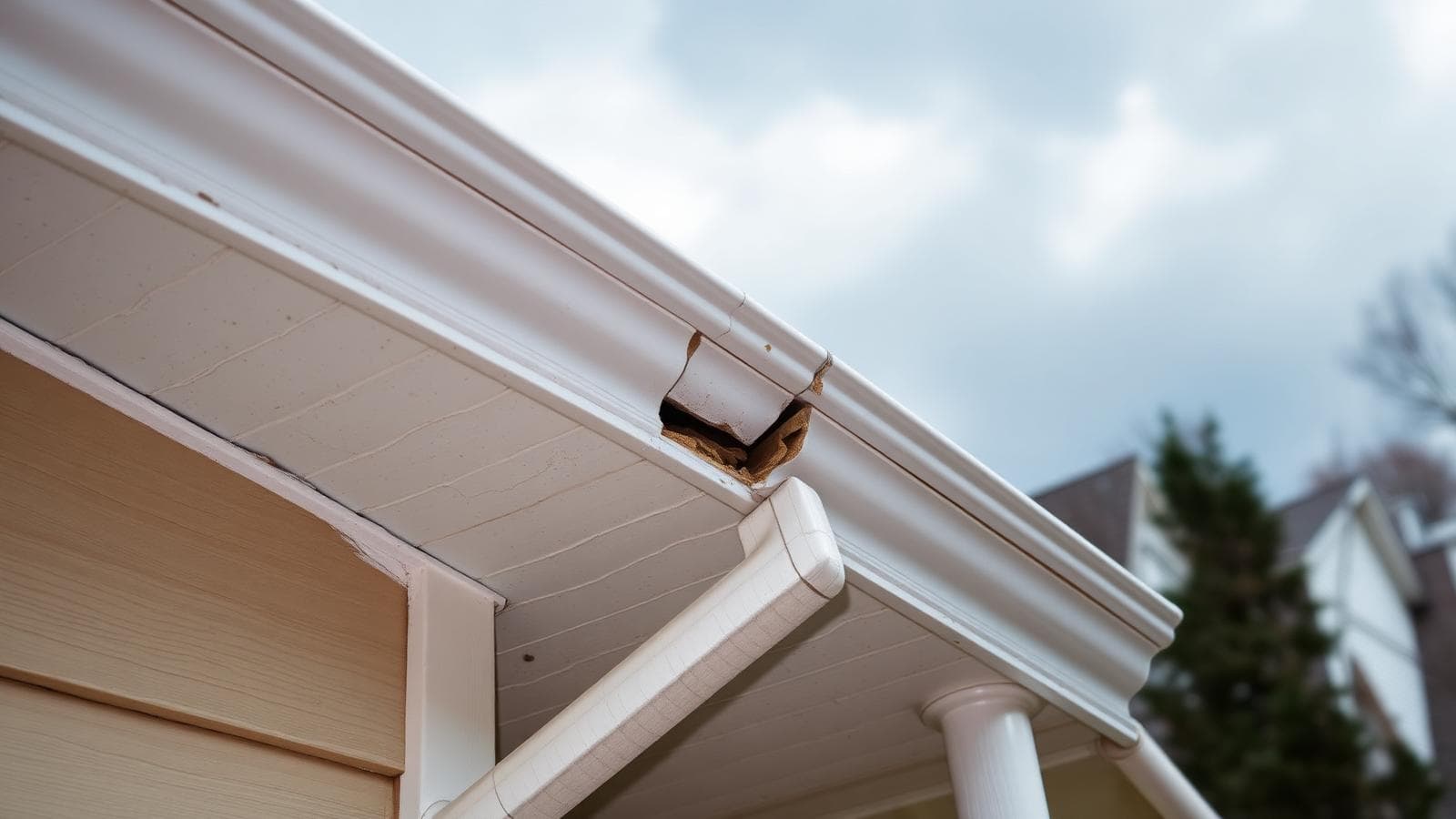
A gutter run should direct water toward its outlets. When part of it bows or dips, water may collect at the low point, overflow, or escape behind the gutter. The visible sag is a reason to investigate, but it does not by itself tell you whether the whole system needs replacing.
This guide focuses on spotting the symptoms and comparing repair options. For more detail about separation at the roofline, see our guide to gutters pulling away from the house.
What you can spot from the ground
Look along the roofline from a safe location. You may notice:
- A dip or bow in the gutter run.
- A gap between the gutter and the fascia.
- A loose or visibly displaced section.
- Water spilling repeatedly over the same edge during rain.
- Streaks on siding below the gutter.
- Peeling paint or staining along the fascia or soffit.
Photograph visible changes and note when the overflow occurs. Avoid standing below a loose section, and do not climb or pull on the gutter to check its strength. A contractor can inspect attachment points and supporting wood with appropriate access.
What can cause the sag
Debris and trapped water add weight. Loose hangers, damaged fasteners, bent material, or deteriorated fascia may allow the gutter to lose its position. Storm damage and installation problems are other possible causes.
Older spike-and-ferrule attachments and newer hanger systems both need sound supporting material. Replacing the hardware alone may not solve a problem if the wood behind it is damaged.
Standing water can also indicate an outlet blockage or incorrect pitch. A useful assessment checks the full run and the downspout rather than treating the visible dip in isolation.
Why the fascia and soffit matter
Fascia is the board along the roof edge where gutters commonly attach. Stains, peeling paint, gaps, and damaged soffit panels can indicate a moisture problem that needs closer inspection.
Those signs do not prove that the wood is rotted or that the gutter is the only cause. Ask the contractor to explain what it finds and whether roof-edge details also need attention.
New fasteners need secure attachment points. If repairs to supporting wood are required, confirm that work is included in the scope or will be priced separately before the gutters are reattached.
Repair or replace: questions that help you decide
| Finding | What to discuss |
|---|---|
| Isolated loose hanger; sound gutter and supporting wood | Whether reattachment and pitch correction can restore drainage. |
| Localized leak at a joint | Whether resealing addresses the cause and surrounding material is sound. |
| Bent, cracked, or deteriorated runs | Whether a section or full run needs replacement. |
| Damaged fascia | What supporting repairs are needed with either option. |
| Overflow after cleaning | Whether outlets, capacity, pitch, or discharge need changes. |
| Recurring failures | Whether previous work addressed the underlying problem. |
Age provides context, but it is not a replacement rule. Widespread damage may justify replacement, while an older but sound run may still be repairable. Ask why each option is recommended for your actual system.
What affects repair cost
The number of affected sections, access, material, and supporting-wood condition all influence the scope. Correcting pitch along a full run is different from replacing one hanger. Downspout changes and old-material disposal may add work too.
Get a written explanation of the repairs, price, and any excluded work. Ask how concealed damage will be documented and approved if it appears during removal. Our estimate checklist helps you compare proposals.
Follow the water beyond the gutter
A repaired gutter still needs a working outlet and an appropriate discharge location. Note any water pooling beside the house and raise it during the assessment.
The Building America Solution Center's drainage guidance explains why gutters and downspouts should carry roof runoff away from the foundation. Gutter repairs may help with that runoff, but grading or other drainage problems may require separate attention.
Maintenance after the repair
Keep debris from blocking the channels and outlets, and watch for changes after storms. Ask the contractor what cleaning and inspection schedule suits your tree cover and roofline. Our West Virginia cleaning frequency guide offers a starting point.
Address a recurring dip or leak instead of assuming the previous repair has settled in. If guards are installed, ask how they will be inspected and how cleaning access is maintained.
Frequently asked questions
Do sagging gutters always need replacement?
No. An isolated attachment problem may be repairable when the gutter and supporting wood are sound. Bent material, widespread deterioration, or capacity problems can change the recommendation.
Can cleaning fix a sag?
Cleaning can remove blockages and excess weight, but damaged attachments or distorted material may still need repair. Have the position and drainage checked rather than assuming debris removal completes the job.
How do I get an assessment?
Flag Gutter offers gutter repair and replacement throughout our Southern West Virginia service area. Request a free written estimate and share the symptoms you have observed.