
Gutter Cleaning Safety: Risks to Consider Before You Start
By Flag Gutter · March 31, 2026 · 3 min read
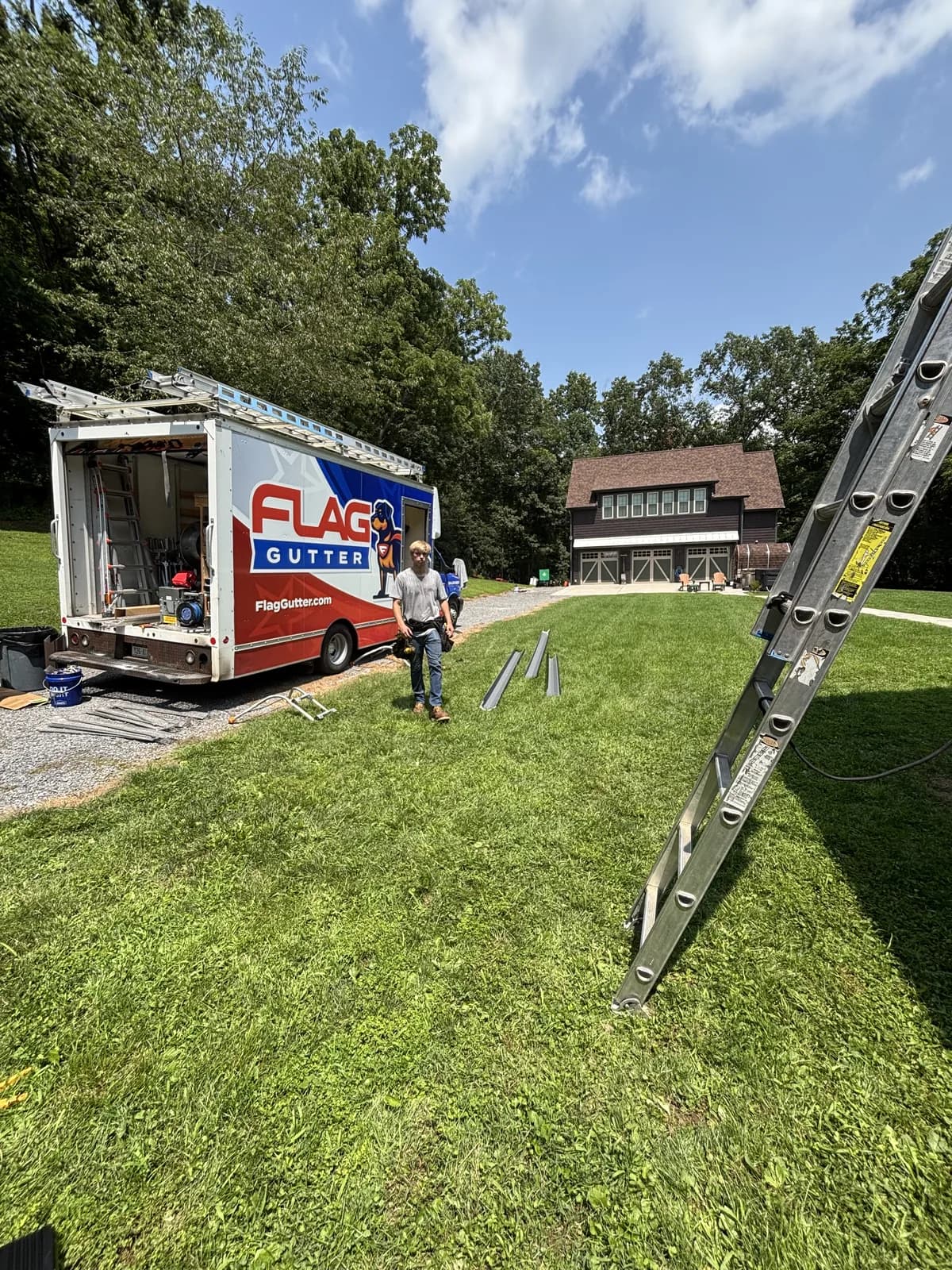
Gutter cleaning involves more than removing leaves. Access to the roofline, unstable footing, nearby electrical lines, and loose gutter components can create hazards before cleaning starts. A new tool or a pair of gloves does not remove those risks.
Use this guide to decide what you can observe safely and what to discuss with a professional. It is not a set of instructions for working on a roof or setting up access equipment.
Start with observations from the ground
On a dry day, look for visible debris, disconnected downspouts, loose sections, and washed-out areas below the eaves. Take photos from a stable location. If you can observe rain from indoors or a sheltered location, note where water spills over and whether it exits the downspouts.
Do not stand beneath hanging components or walk into a storm to investigate. Our ground-level gutter inspection guide explains what these observations can and cannot tell you.
Ladder work deserves a separate decision
CDC/NIOSH ladder safety guidance identifies overreaching, unsuitable equipment, poor inspection, and carrying objects while climbing among ladder hazards. Cleaning adds repeated reaching and handling of debris to the access problem.
Uneven ground, steps, narrow spaces, and multiple stories complicate access. If the work requires climbing, discuss the access plan with a qualified contractor. Having someone nearby or watching a video does not establish that a particular setup is suitable.
Keep clear of overhead electrical lines
The Consumer Product Safety Commission warns about ladders and overhead power lines. Long poles and cleaning attachments also need clearance. Do not attempt cleaning near electrical lines or assume an insulated-looking tool makes that work safe. Arrange appropriate professional help instead.
Ground tools have limits
An extension attachment may let someone reach debris without climbing, but it does not provide a full view inside the gutter or confirm the condition of its attachments. Long tools can be difficult to control and can bring debris down onto people, windows, or landscaping.
Follow the specific tool's instructions and avoid areas with electrical lines or loose components. If you cannot see or control the work, stop. A clear-looking channel also does not prove an outlet or downspout is open.
Weather and debris can change the job
Postpone observations or work when wind, lightning, ice, or slippery conditions create exposure. Do not try to pull frozen debris or hanging ice from the roofline.
Gutters can contain sharp fragments, nests, or other material that needs special handling. Gloves and eye protection do not make every kind of debris appropriate to handle. If you discover nesting animals, suspected hazardous material, or unstable components, leave the area and seek suitable help.
Ask what professional cleaning includes
Before booking, clarify the scope rather than assuming every visit includes the same work:
- Which gutter runs and downspouts will be cleaned?
- How will the crew assess access and nearby electrical hazards?
- Are guards included, and how will they be removed or accessed if necessary?
- Will the visit include checking outlets and downspout flow?
- How will damage be documented and additional repairs approved?
- Who removes the debris and cleans up the property?
Ask for current licensing and insurance information appropriate to the work. Our contractor insurance checklist explains what to verify.
Cleaning and repair are different scopes
Clearing debris may restore flow, but it does not repair a split gutter, loose attachment, or damaged supporting wood. If water still spills after cleaning, ask for the cause to be assessed before authorizing more work. See why gutters can overflow after cleaning.
Flag Gutter offers professional gutter cleaning and gutter repair in Southern West Virginia. Request a free written estimate to discuss your home's access, drainage concerns, and proposed work.